Never Miss a Call After Hours
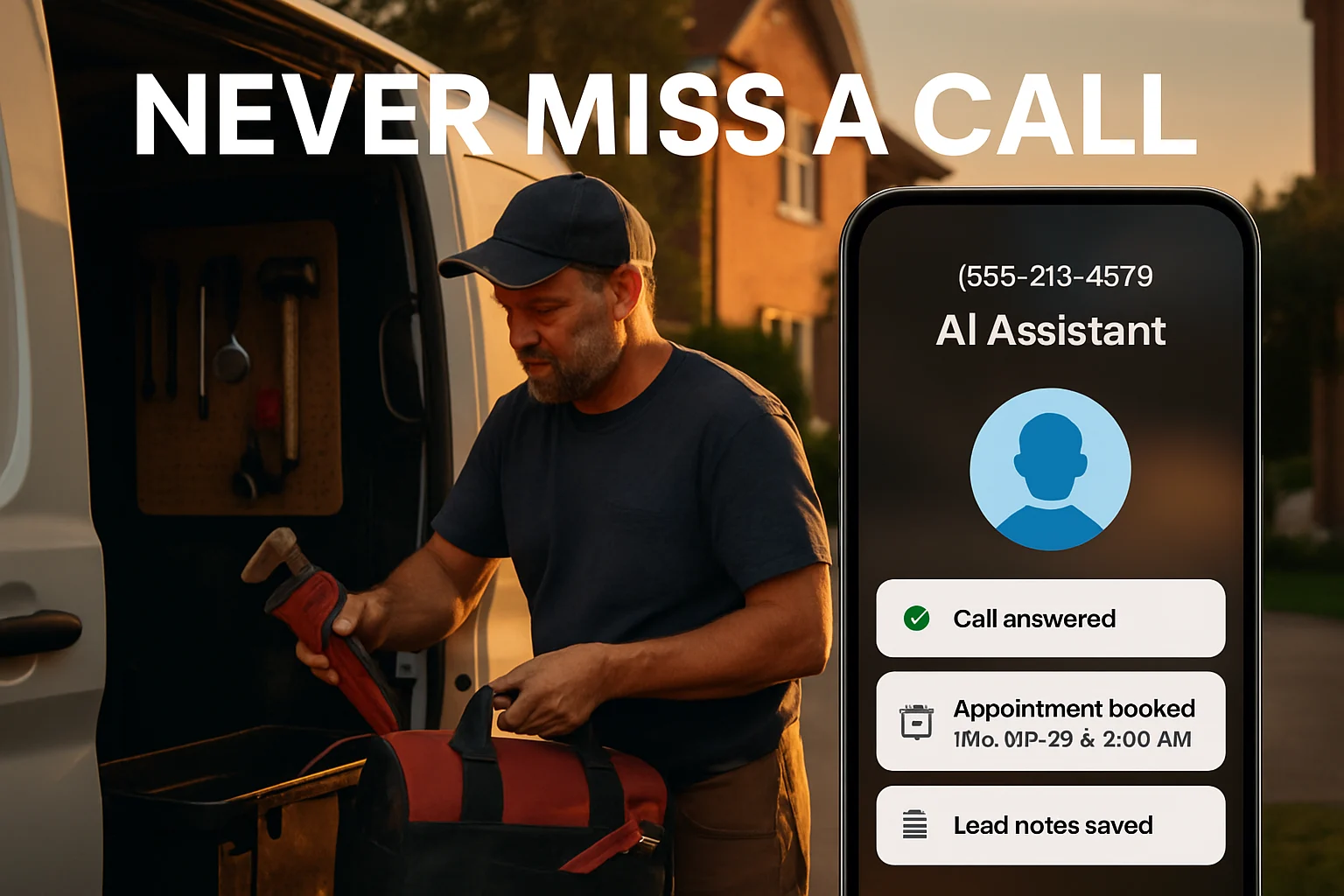
Tuesday, 6:40pm. You are still at the last job of the day, half under a sink, and your phone starts buzzing in your pocket. You let it ring because both hands are wet and the customer in front of you is asking one more question before you pack up. By the time you get back to the van, there is a missed call and a voicemail from someone who wanted to know if you serve their area and whether you could come out tomorrow. You call back a little later. No answer. That is the kind of call that sticks with you, because you did not lose it from doing bad work. You lost it because you were working.
Why do calls always come in when my hands are full
Most local businesses do not miss calls because they do not care. They miss calls because the phone rings at the exact wrong moment.
You are driving. You are with a customer. You are on a ladder. You are locking up. You are eating dinner after a long day and do not want to start another job estimate at the kitchen table.
A lot of callers are not looking for a long conversation. They want a few basic answers. Do you serve my area. Are you open tomorrow. Can I book. If they hit voicemail, some will leave a message. Some will not. Either way, you have turned a live conversation into a task you now have to chase.
The fix is not to become more available every hour of the day. The fix is to make sure routine calls can still get handled even when you cannot pick up.
What should my voicemail say tonight
If you do nothing else today, fix your voicemail. A weak voicemail usually says some version of leave a message and we will get back to you. That gives the caller no reason to believe they will hear back soon, and it does not tell them what information you need.
A better voicemail does three simple things:
- It says why you missed the call in plain language.
- It tells the caller exactly what to leave.
- It tells them when they can expect a reply.
Use a script like this:
Hi, you have reached [your business name]. I am likely on a job or with a customer right now. Please leave your name, your number, your address or area, and a short note about what you need. I will get back to you by the next business day.
If you only want certain details, say that. If you only book estimates on certain days, say that. The point is to make the next step easy for the caller and easy for you.
This will not solve every missed call, but it will make the calls you do miss easier to call back properly.
What answers should I write down before someone else takes calls
Whether a person answers your calls, or a tool does, the weak spot is usually the same: the business owner has never written down the basic answers.
Take fifteen minutes and make a simple call sheet. If you cannot hand the answer to someone else clearly, you will keep getting dragged into every routine question yourself.
- Service area: Which towns, suburbs, or postcodes do you cover, and which do you not.
- Jobs you take: The common jobs you do every week.
- Jobs you do not take: This saves awkward calls and wasted time.
- Business hours: When you answer calls, when you book, and when you are closed.
- Booking rules: What details you need before an appointment can be booked.
- Quote rules: Whether you give prices by phone, after photos, or only on site.
- Urgent cases: What should happen when the call cannot wait for a normal reply.
Keep the wording simple. Write it the way you would actually say it on the phone. If a sentence sounds stiff, shorten it.
This one sheet does two jobs. It helps you answer consistently, and it becomes the approved source for anyone or anything that helps with your calls later.
How to handle after-hours calls without staying open
You do not need to be personally available all night to be helpful after hours. You need a clean process.
Think about what a caller should be able to get done when you are closed. For most local businesses, the list is short and practical: ask a common question, leave the right details, and book if there is real availability.
Set up the after-hours path
- Decide what can be handled right away. Common questions, lead capture, and appointment booking are usually safe choices.
- Decide what must wait for you. Anything outside your approved information should be held for a human reply.
- Use one approved source of truth. Your hours, service area, job types, and booking rules should all live in one place.
- Keep the calendar real. If someone can book after hours, it should be against actual availability, not guesswork.
- Save every conversation. A note in one place beats scraps of paper and half-heard voicemails.
If you build this process well, after-hours calls stop feeling like loose ends. They become orderly. The caller gets help now, and you walk into the next day with the details already captured.
What a 6:40pm call should sound like
Say you run a plumbing business. You are finished for the day, but a caller rings your business number after hours because they have found a leak and want to know whether you cover their area and when someone can come.
The bad version is voicemail. The caller says their name too fast, forgets their postcode, and never mentions the best time to come. You return the call later. They are busy, or they have already called somebody else.
The better version is immediate help based on the information you have already approved.
The caller reaches your business line and gets an answer right away. They ask if you serve their area. They get a clear yes or no based on your approved service area. They ask about the kind of job they have. They get the basic answer you would normally give. Then their name, phone number, address, and job details are captured, and the next open appointment on your real calendar can be offered if booking is available.
Now the morning starts differently. You are not listening to a rushed voicemail while backing out of the driveway. You already have the conversation saved. You can see what the caller needed, what was said, and whether an appointment was booked.
That is the real win here. Not magic. Not hype. Just fewer routine calls falling through the cracks because you were busy doing the actual work.
How an AI Employee can cover the routine calls for you
This is the job AI You is built to do for local businesses.
One AI Employee answers the website chat and the phone 24/7 from the same approved Business Brain. On the phone, it answers on your own local number, uses only the information you have approved, responds to common questions, qualifies the caller, and can book appointments against real availability with Google Calendar.
It also saves the conversation in the built-in CRM, along with leads and appointments from chat, phone, and forms. If a call is missed or a new lead comes in, automated follow-up texts and emails can go out. You also get daily dashboard activity, conversation transcripts, and reporting, so you can see what happened without digging through voicemails.
The important part is control. The AI does not make things up. It only answers from the information you have approved in Business Brain. If your hours change, or you stop taking a type of job, you update the approved information and the answers follow that.
That means you stay the owner, and the routine calls stop pulling you away from the work only you can do.
Frequently asked questions
Can an AI answer my business phone after hours
Yes. The AI Phone answers, qualifies, and books appointments for local businesses 24/7 on the business's own local number. It handles routine calls using the information you have approved.
Will it say something I did not approve
No. The AI only answers from information the owner has approved in Business Brain. That keeps you in control of what it can and cannot say.
Can it book into my real calendar
Yes. Calendar booking works against real availability with two-way Google Calendar sync. The appointment details and conversation are then saved in the CRM.
Do I need a contract or credit card to start
No. There is no long-term contract, and the service is month to month. You can build it, review it, test it, and subscribe only if you are happy, with no credit card to start.